
Roofing
Ice Dams, Roof Ventilation, and Underlayment: What Protects a New England Roof
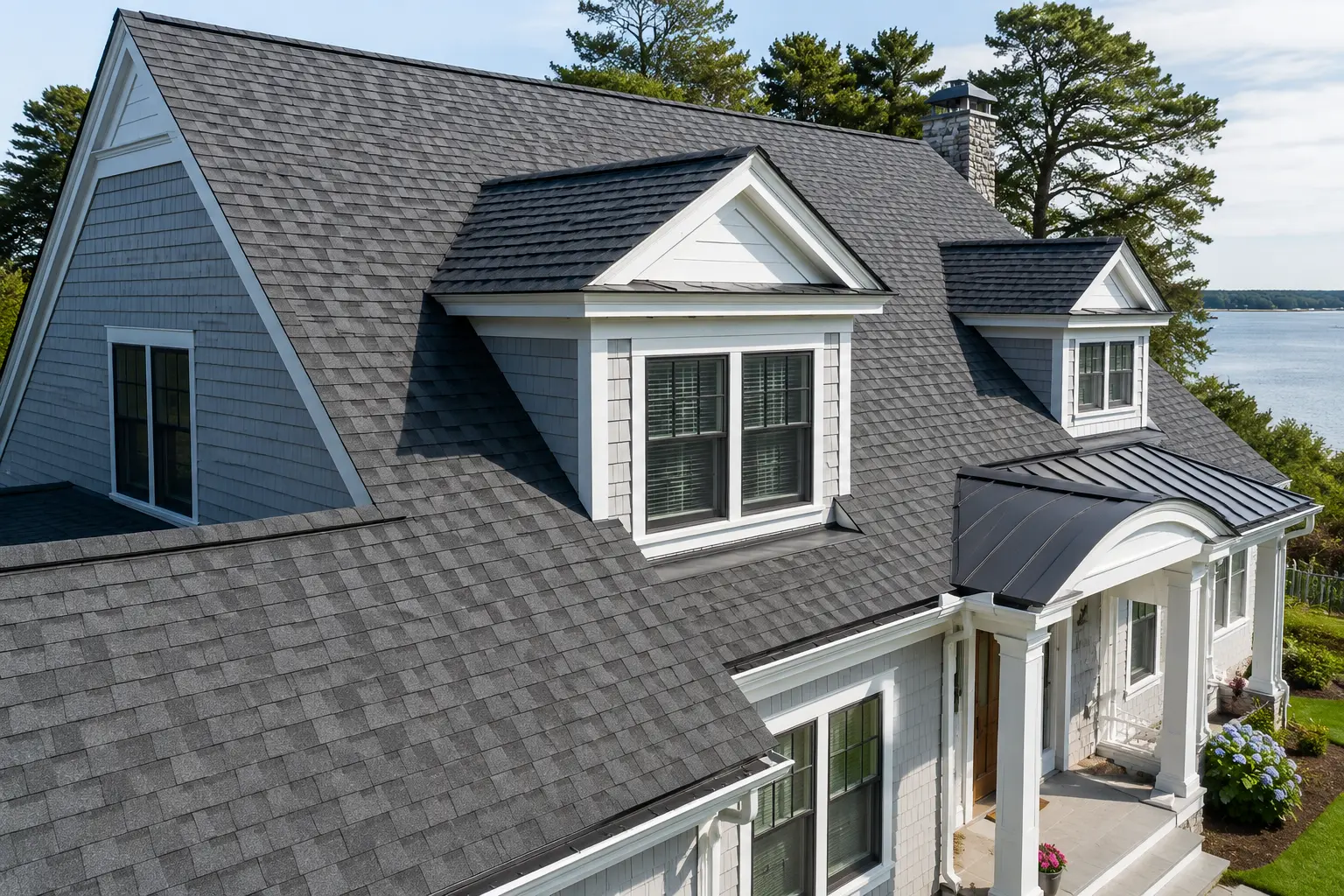
In New England, what lies under the shingles matters as much as the shingles. Ice dams, poor ventilation, and missing underlayment are behind many winter leaks. Here is how they work and what a properly built roof does about them.
Key points
- Ice dams form when heat from the house melts snow on the roof and the water refreezes at the cold eaves.
- Balanced ventilation, air coming in at the soffits and out at the ridge, keeps the roof deck cold and helps stop ice dams.
- An ice barrier membrane along the eaves, at least 24 inches inside the wall line, keeps backed-up water out.
- Underlayment over the rest of the deck is the second line of defense behind the shingles.
How ice dams form
Warm air from the house heats the roof deck and melts the snow on top. The water runs down to the eaves, which sit over the cold overhang, and freezes again. The ridge of ice grows, water backs up behind it, and it works its way under the shingles and into the walls and ceilings.
Ventilation keeps the roof cold
A ventilated roof pulls outside air in at the soffits and lets it out at the ridge, which keeps the roof deck close to the outdoor temperature. Combined with good attic insulation and air sealing, it stops the melting that starts an ice dam. Ventilation also lets moisture out of the attic and helps shingles last.
Ice barrier along the eaves
An ice barrier is a self-adhering waterproof membrane installed under the shingles at the eaves. The building code requires it where ice dams are common, extending at least 24 inches inside the exterior wall line. It is also used in valleys and around chimneys and skylights.
Underlayment over the rest of the roof
Underlayment, felt or synthetic, covers the rest of the deck. It sheds any water that gets past the shingles and protects the deck during installation. Synthetic underlayment is lighter and more tear-resistant than traditional felt.
Signs your roof has a problem
Call a roofer when you see any of these:
- Icicles and thick ice along the gutters in winter.
- Water stains on ceilings or walls near the outside of the house.
- Frost or damp insulation in the attic.
- Missing, curling, or cracked shingles, and loose flashing.
Frequently asked questions
Will heat cables stop ice dams?
They can keep a channel open, but they treat the symptom. Ventilation, insulation, and air sealing stop the melting that causes ice dams.
Does every new roof get an ice barrier?
In Massachusetts a code-compliant roof has an ice barrier along the eaves. It is worth confirming it is in your estimate.
Can a leak be repaired without a new roof?
Often, yes. Failed flashing, a few damaged shingles, or a worn pipe boot can be repaired. If the roof is near the end of its life, replacement may be the better value.
Need a new roof?
Cedar House Carpentry handles roofing across Cape Cod and the South Shore with our own in-house crew, fully licensed and insured.