
Decks
Composite vs. PVC vs. Wood Decking: Which Is Right for Your Home?
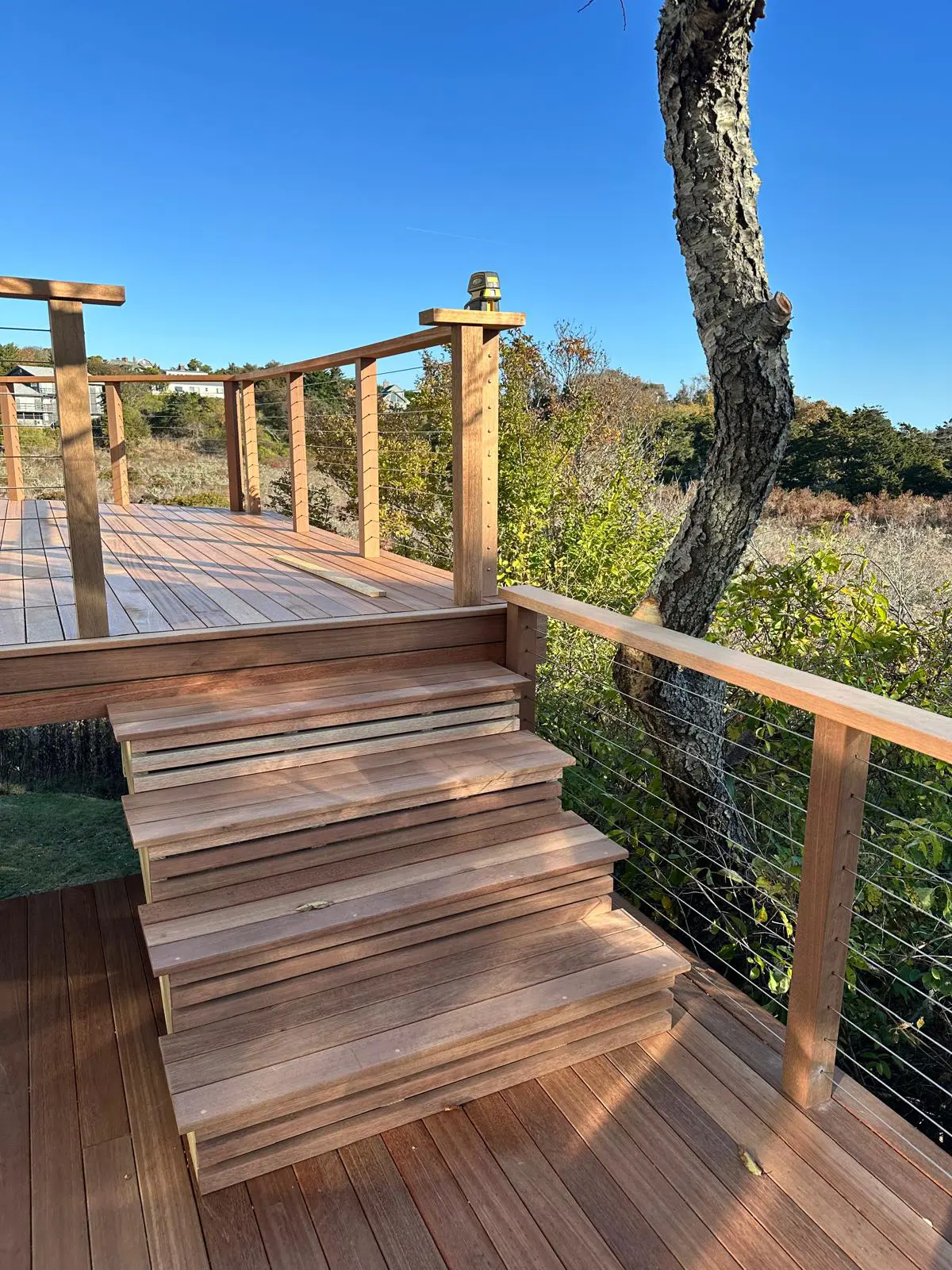
Most new decks here are built with one of three boards: pressure-treated wood, composite, or PVC. Wood is the least expensive to install, composite and PVC are the low-maintenance options, and the right choice depends on how much upkeep you want, how much sun and shade the deck gets, and how close you are to salt water.
Key points
- Pressure-treated wood costs the least up front but needs regular cleaning and staining.
- Composite and PVC decking skip the staining; in the 2025 Cost vs. Value report a composite deck cost about $5,200 more than wood in New England and recovered more at resale.
- PVC handles moisture best and weighs less; composite has a more wood-like feel. Both can get hot in full sun.
- The frame underneath is still pressure-treated lumber, so it has to be built to stay dry no matter which boards go on top.
Pressure-treated wood
Wood is the budget choice and feels like a traditional deck. It also needs the most care: cleaning and a fresh coat of stain or sealer every few years, and replacing boards that split or cup. In the 2025 Cost vs. Value report, the wood version of the benchmark 16-by-20-foot deck cost $20,603 in New England.
Composite
Composite boards mix wood fiber and plastic, usually with a protective outer shell. They do not need staining, they resist rot, and they come in colors and grain patterns that look like wood. The composite version of the same benchmark deck cost $25,817 in New England, about $5,200 more than wood, and recovered 95.8 percent of its cost at resale compared with 79.1 percent for wood.
PVC
PVC boards have no wood fiber at all, so they shrug off moisture and mildew better than any other option and weigh less than composite. That makes them a good fit for shaded lots, decks close to the ground, and spots that stay damp. They are usually the most expensive of the three.
What changes near the water and in the shade
Near salt water, the board matters less than the hardware: stainless or coated fasteners and connectors keep the deck tight for years. On wooded or shaded lots, the enemy is moisture, so airflow under the deck and boards that do not hold water matter most. And on a deck that takes full afternoon sun, lighter colors stay cooler under bare feet than dark ones.
| Wood | Composite | PVC | |
|---|---|---|---|
| Up-front cost | Lowest | Higher | Highest |
| Staining or sealing | Every few years | No | No |
| Moisture and mildew | Needs care | Good | Best |
| Feel underfoot | Natural wood | Close to wood | Smooth, lighter |
Installing composite and PVC the right way
Composite and PVC boards follow the manufacturer’s rules for joist spacing, gaps between boards, and fasteners, and the warranty depends on them. Diagonal or pattern layouts usually need joists closer together. The frame underneath is still pressure-treated wood, so it needs the same care in flashing the ledger and keeping water off the framing.
Frequently asked questions
Which decking lasts the longest?
Composite and PVC last longer than wood with far less upkeep, as long as the frame underneath is built well and the boards are installed to the manufacturer’s rules.
Does composite decking get hot?
It can, especially in dark colors and full sun. Lighter colors and some newer boards stay cooler.
Can I put composite boards on my old deck frame?
Sometimes. The frame has to be sound and the joist spacing has to meet the board maker’s requirements, which older frames often do not.
Planning a new deck?
Cedar House Carpentry handles decks across Cape Cod and the South Shore with our own in-house crew, fully licensed and insured.